
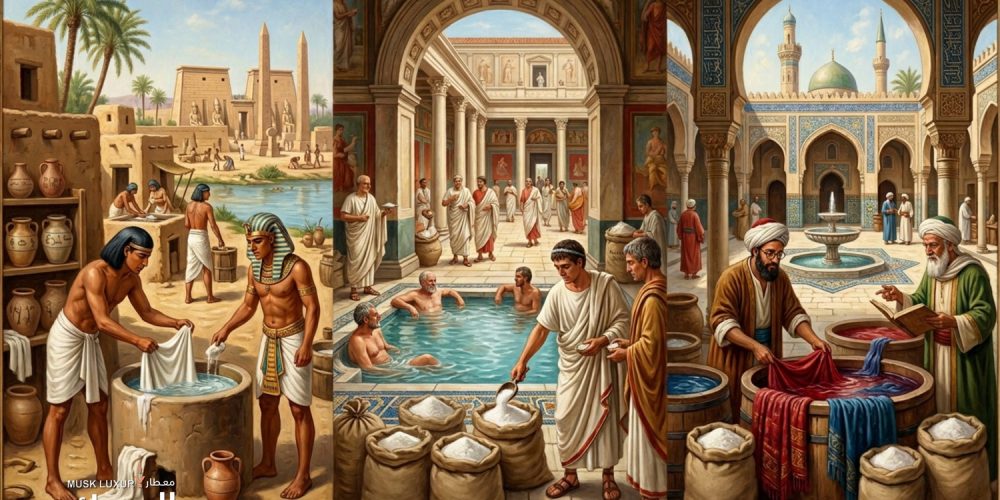
In 79 CE, Pliny the Elder — the famous Roman historian — was writing the final words of his monumental encyclopedia. He did not know that Mount Vesuvius would end his life in days. Among what he recorded in those last pages, one sentence has endured two thousand complete years: "Alum eliminates unpleasant odors under the armpits and prevents excessive sweating." What Pliny wrote about a small transparent stone remains a scientific fact confirmed by 21st-century researchers — and that alone is enough to be our entry into the longest beauty story in human history.
Egypt, 1500 BCE — When Alum Was More Valuable Than You Can Imagine
Imagine you are a merchant in the western Egyptian desert 3,500 years ago. In your bag, no gold, no precious gems — something completely different: small transparent crystals that glitter in the scorching sunlight. When you reach the market, priests, princes, and merchants rush toward you. Everyone wants this amazing stone that purifies murky water, cleanses wounds, and makes linen cloth hold its color forever.
This was what alum was in Pharaonic Egypt — not just a stone, but science, trade, and care all at once. The Egyptians extracted it from the western desert and discovered through experience what science would not formally name until modern times: that its crystals prevent bacterial growth, protect the skin, and preserve the body.
Herodotus Records — When Egyptian Alum Amazed the Ancient World
In the fifth century BCE, Herodotus — the father of Greek history — traveled to Egypt. He returned with many stories and wonders, but he did not fail to mention in his famous book The Histories that precious Egyptian crystal that flowed from the Nile markets to the ports of Greece, the shores of Rome, and the bazaars of the Levant. Alum was not a local product — it was an export that crossed seas and entered royal palaces.
Rome — The First Written Deodorant Recipe in History
Let us return to Pliny the Elder. Romans were obsessed with cleanliness and appearance. The public baths — the thermae — were not just bathing places; they were a social, political, and commercial club all at once. After his refreshing bath, the elegant Roman would take his small transparent stone and run it under his armpits before putting on his clean white toga.
Pliny wrote with a scientist's precision: alum tightens pores, stops excessive sweating, and eliminates underarm odor. He could not have imagined that what he described would be "rediscovered" two thousand years later as a natural alternative to chemical deodorants — but the truth is it was never rediscovered. It was never forgotten in the first place.
Islamic Civilization — When Alum Drove the Economy of an Entire Continent
After the fall of Western Rome, alum did not disappear — it moved to a more knowledgeable and caring civilization. In the Islamic Golden Age, alum held real economic weight: massive trade caravans crossing the desert loaded with it from the Chad region to Egypt, then Morocco, then the thirsty European markets. The textile and dyeing industry in Islamic countries depended entirely on it to fix colors permanently.
As for Abu Bakr Al-Razi — the genius who founded experimental medicine — he dedicated alum its place in his medical texts and documented its uses with a scientist's precision. It was documented science for him, not a folk secret passed around in whispers.
Yemen — The Land of Shab Al-Fuad That Never Ran Dry
While trade caravans crossed the desert, the Yemeni mountains continued to harbor one of the purest natural alum sources in the world. "Shab Al-Fuad" — that beautiful name carrying the warmth of the heart — is the same stone that Pharaonic Egypt, Imperial Rome, and the great Islamic cities knew. Yemeni production continued for thousands of years without interruption, and Yemeni spice markets still sell it today just as they sold it in Pliny's era.
The Muslim Home — Between the Sunnah of Fitrah and the Wisdom of Alum
In Islamic tradition, alum was connected to something deeper than just a daily habit. Removing underarm hair is among the Sunnah of Fitrah that Islam encourages — and alum was the natural companion for this tradition through the centuries. After removal, alum is applied to the sensitive skin: it soothes, cleanses, closes pores, and protects from odor. All with one natural stone that God created in the earth.
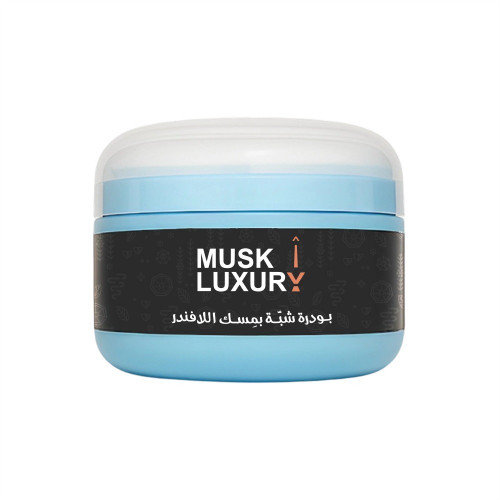
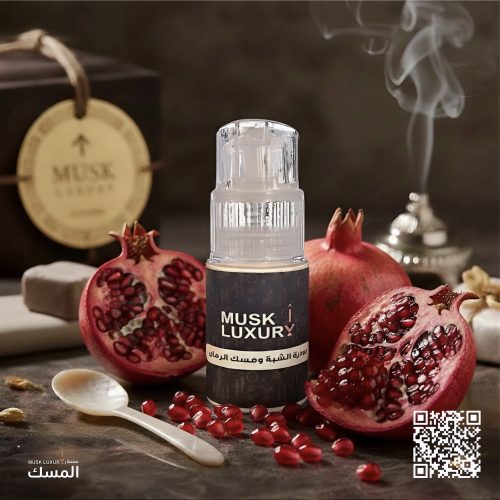
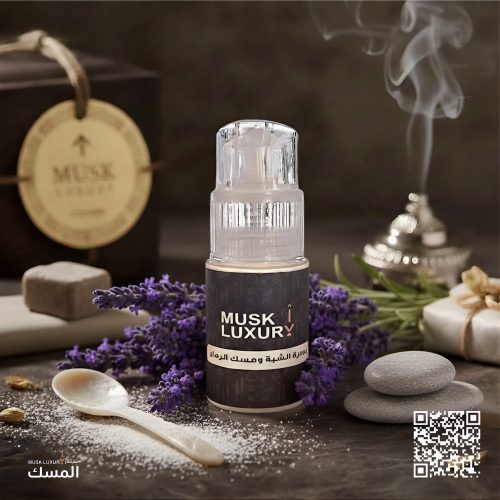
Our grandmothers knew this well — it was not a "discovery," it was a civilizational inheritance passed from mother to daughter. Centuries before chemical deodorants, alum was the secret told to the bride on her wedding day and every day after. At Musk Luxury we carry this heritage with a contemporary fragrance: Alum Musk Powder in four scents — for the woman who wants natural authenticity with a touch of this era.
The Neighborhood Barber — The Faithful Witness Since Rome
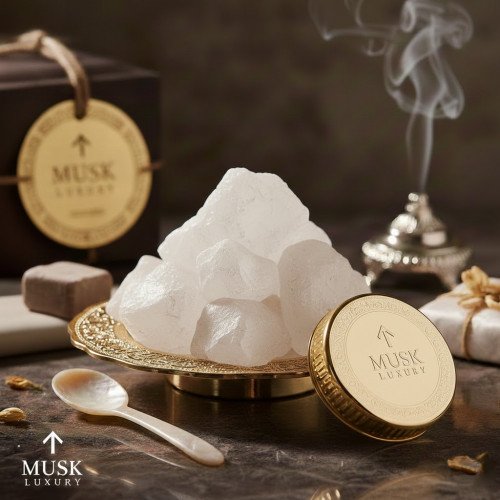
In every Arab city, there is an old barber who still keeps a piece of alum on his table. Not because he knows its history with Pliny the Roman, but because his father and grandfather taught him: alum closes wounds, stops razor bleeding, and gives the skin a freshness no cream can match. This tradition has never been interrupted — from Rome in 79 CE to the barber in your neighborhood today. That same stone exists in Natural Alum Stone from Musk Luxury — with selected quality and 100% purity as the ancestors knew it.
Today — Why Are People Returning to What the Pharaohs Knew?
In a world filled with aluminum chemical deodorants, parabens, and alcohol, people began asking a simple question: what did our ancestors use? The answer came from history itself — alum. The Pharaoh used it. The Roman used it. The Muslim scholar documented it. The grandmother preserved it. Modern science confirmed it. What changed? Just one thing: we forgot for a moment.
At Musk Luxury we offer this historical heritage in forms that suit our lives today:
- Natural Alum Stone — in its original raw form as ancestors used it for three thousand years
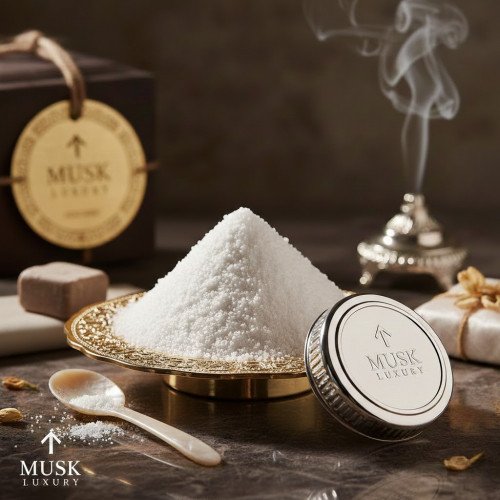
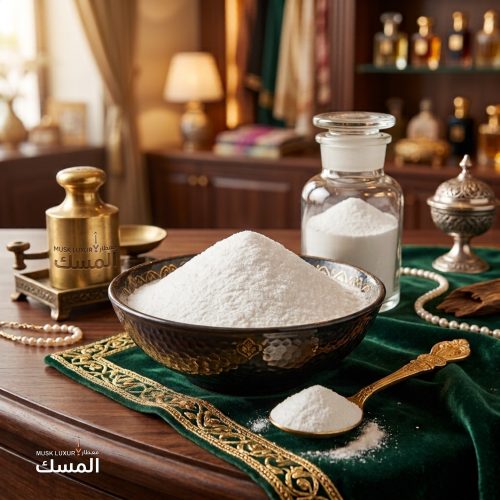
- Pure Ground Alum 250g — for the homemade mixtures grandmothers used to make
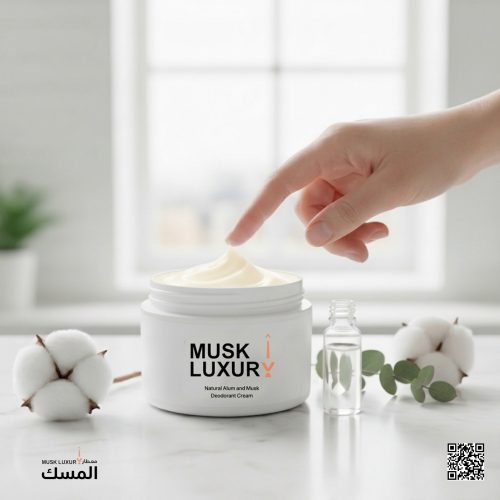
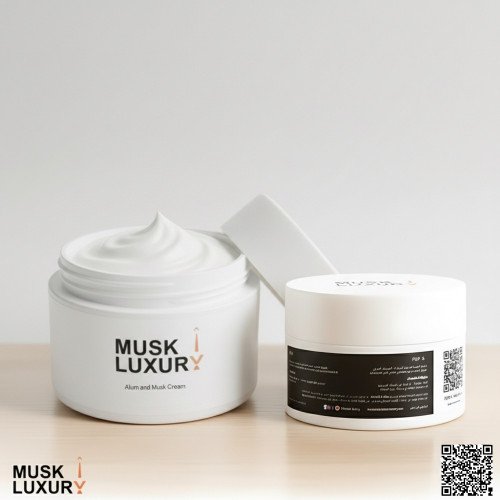
- Alum Musk Cream — the modern formula combining ancient wisdom with musk fragrance
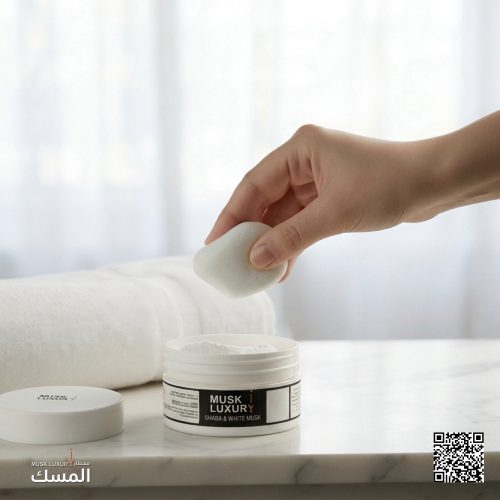
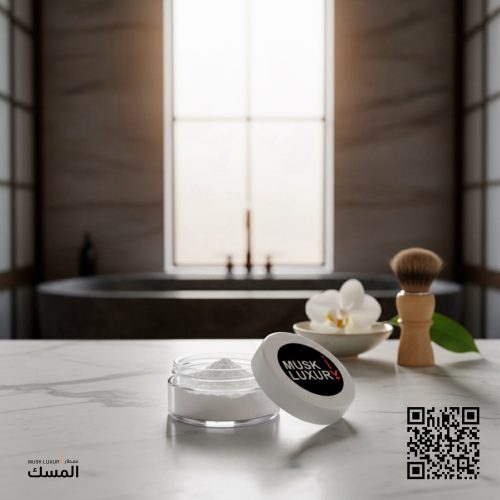
- Alum Musk Powder 4 Scents — for brightening and protection with contemporary development
From History to Today: What the Pharaohs, Romans, and Muslims used was not wrong — it was science ahead of its time. Natural alum has not changed in 3,500 years. We have simply remembered the correctness of their decision.

Leave a Comment