Before You Buy Expensive Oud — Read This
Many buyers cannot distinguish between authentic natural oud oil and synthetic or chemically enhanced oud — and end up with a product that isn't worth what they paid. This guide gives you practical tools to tell the difference yourself.
1 — What Is the Core Difference?
Natural oud is an oil extracted from agarwood trees (Aquilaria) through steam distillation after the tree is infected by a specific fungus that triggers resin production. Synthetic oud is a chemical blend that mimics the scent without any connection to real agarwood.
2 — Clear Signs to Spot the Difference
Color
- Natural: Dark brown to black — deep rich color reflecting natural resin
- Synthetic: Transparent or very light brown — looks diluted or watery
Texture
- Natural: Heavy and viscous — stretches slowly from a spoon
- Synthetic: Light and fluid — drips quickly like water
Scent on Skin
- Natural: Develops after application — opens with a top note then deepens gradually
- Synthetic: Static flat scent — stays the same from the first moment
Longevity
- Natural: Lasts many hours on skin and days on fabric
- Synthetic: Fades quickly — rarely lasts more than one or two hours
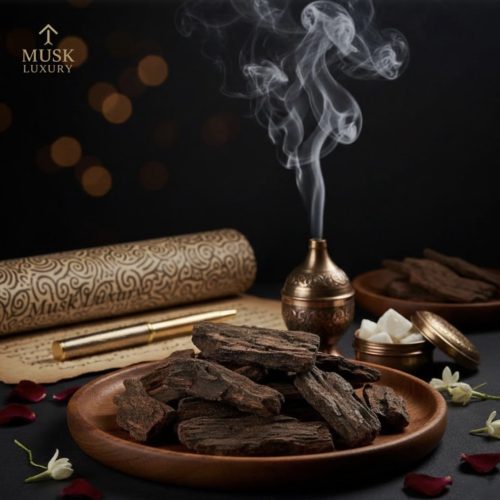
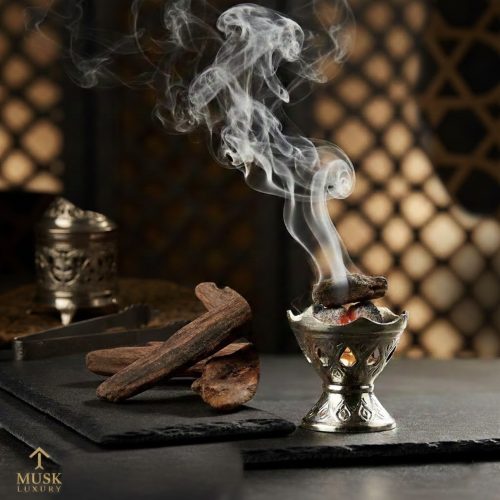
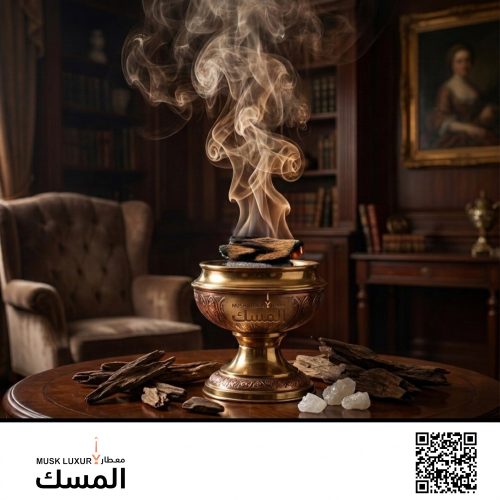
On Charcoal (for incense)
- Natural: Clean white smoke and a deep gradual incense aroma
- Synthetic: Black smoke or an unpleasant burning smell appears quickly
3 — Quick Practical Test
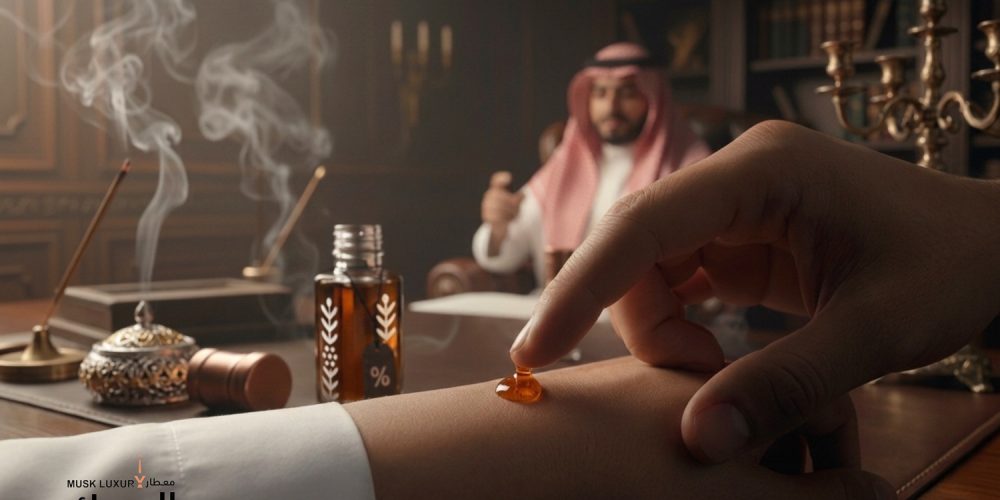
Put a small drop on the back of your hand and wait 10 minutes. Natural oud deepens and evolves — the scent after 10 minutes differs from the first impression. Synthetic oud stays the same or fades.
4 — Why Do Some Sellers Use Enhanced Oud?
Chemical-enhanced oud is natural oud with added chemicals to strengthen or intensify the scent. It is not fully synthetic but not 100% natural either. Its sign: a very powerful scent from the first moment that then disappears suddenly.
Our 100% Natural Oud at Musk Luxury
At Musk Luxury we are committed to pure natural oud with no chemical additives. Try the difference yourself:
- ☞ Royal Cambodian Aged Oud Oil — sweet warm, develops on skin for hours
- ☞ Fragrant Cambodian Oud Oil — 100% natural at an accessible price
- ☞ Maroki Super Grade Oud — heavy incense exceptional for majlis
- ☞ Kalimantan Tiger Oud — first grade plus from the rarest oud varieties
Leave a Comment